Scammed or hacked? South Africa now has a free Cyber Helpline
By AdUncovered
Updated 27 October 2026
If you have been scammed, hacked, threatened or impersonated online, working out what to do next can feel overwhelming. A new free service gives people in South Africa somewhere to start: The Cyber Helpline offers online guidance and support for people affected by cyber incidents.
The South African pilot is a partnership involving MiDO Academy, The Cyber Helpline (UK) and Amazon Web Services (AWS). The helpline’s launch page is dated 5 October 2026, and the launch was publicly reported on 12 October. It is available at thecyberhelpline.com.
What the Cyber Helpline can help with
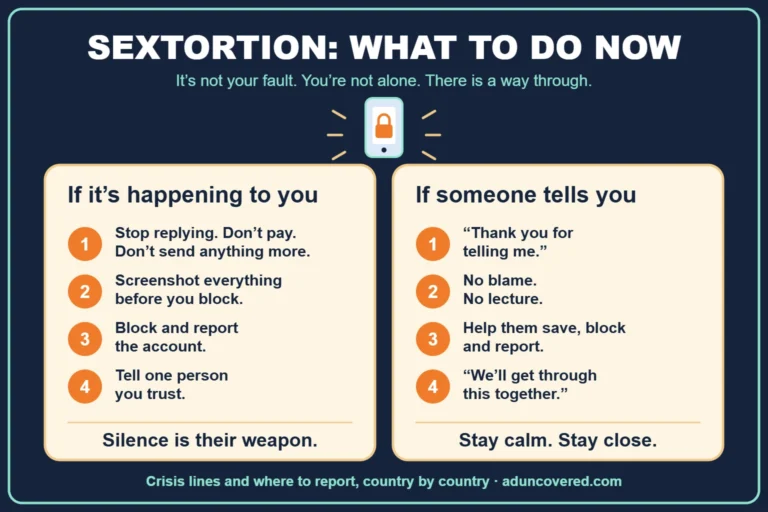
The service is for people aged 13 and older in South Africa, including individuals and sole traders. It is free and confidential. The partners say it can help with online fraud, investment and employment scams, hacked accounts, phishing and smishing, fake social-media profiles, sextortion, online harassment, identity theft, malware and ransomware. The pilot is planned to run for an initial 12 months. (The Cyber Helpline; Bizcommunity)
Its purpose is to help someone understand what may have happened and take practical steps to limit further harm. This can include securing an account or device, preserving relevant evidence and working out where an incident should be reported. It is a support service, not a bank, police service or money-recovery company.
24/7 online guidance does not mean an instant phone hotline
People can start a conversation through the website’s chatbot at any time and receive step-by-step guidance. If an incident needs more help, the case may be passed to a trained human responder. The service does not operate as a traditional telephone hotline with an immediate human answer; human follow-up is coordinated through its online platform. (The Cyber Helpline; TechCentral)
TechCentral reported that responders typically check new cases twice a day and that the service’s official turnaround time for human support is 72 hours. That makes the helpline useful for guidance and next steps, but it should not delay urgent action with a bank, police or emergency support. (TechCentral)
If you have paid a scammer, contact your bank first
If you have just transferred money, shared banking credentials or approved a payment you did not intend, contact your bank’s fraud team immediately using the number in the official banking app, on your card or on a statement. Ask the bank to secure your account and advise whether it can attempt to stop or recall the payment. Do not wait for an online support response before taking this urgent step. Our guide What to Do Immediately After Being Scammed sets out the other first steps.
After contacting the bank, the Cyber Helpline can help you think through what happened, secure other affected accounts and devices, preserve evidence and identify additional reporting options. The service says it cannot recover money or investigate crimes. Where appropriate, it may refer people to banks, the South African Police Service (SAPS), specialist organisations or mental-health services. It does not replace a formal police report. (The Cyber Helpline; TechCentral)
A place to ask for help without judgment
Scams and online abuse can cause distress as well as financial or technical harm. People may feel embarrassed, frightened or unsure whether what happened is serious enough to report. The helpline says people can start a conversation even if they are uncertain whether an incident counts as cybercrime, fraud or online harm.
The service is described by its partners as confidential. They say case information is encrypted and stored on AWS infrastructure, access is limited to vetted responders and supervisors, and information is shared with other organisations only with the person’s consent. These are the partners’ stated practices; people should review the helpline’s privacy information before submitting sensitive details. (The Cyber Helpline; Bizcommunity)
Who is behind the service?
The South African pilot brings together MiDO Academy, The Cyber Helpline and AWS. MiDO Academy hosts the local project and student volunteer responders. The Cyber Helpline provides its operating model, training and mentorship. AWS funds the pilot and provides its cloud infrastructure. KnowBe4 Africa also contributed to developing the initiative. (The Cyber Helpline; KnowBe4)
How to use the Cyber Helpline
Visit thecyberhelpline.com and start the online chat. You can use it for practical guidance after scams, hacked accounts, phishing, sextortion and other covered incidents. It is available to people in South Africa aged 13 and older, including sole traders.
If money has been taken or your bank account may be at risk, contact your bank’s fraud team first. Then use the helpline for further guidance and report the incident through the appropriate formal channels. Keep screenshots, messages, transaction references and other evidence where safe to do so, and don’t delete relevant conversations before considering whether they may be needed for an investigation.
The new helpline gives South Africans a free place to start after a cyber incident. Knowing its limits helps you use it effectively: get urgent financial action from your bank, use the Cyber Helpline for support and guidance, and report crimes through the proper authorities.
Sources
- The Cyber Helpline, The Cyber Helpline Pilots in South Africa, launch page dated 5 October 2026.
- Bizcommunity, Free cybercrime helpline launches in South Africa, 12 October 2026.
- TechCentral, Free cybercrime helpline goes live in South Africa, 12 October 2026.
- KnowBe4, Free Helpline for Victims of Online Crime Pilots in South Africa, 20 October 2026.
Check before you pay
About to pay a seller or business you don’t know? Start with a Free Quick Check of the advert link. It screens for common warning signs and shows where each result came from.
If you need the seller researched, a Quick Report or Comprehensive Report brings together source-linked Search Results on the seller and the offer. Neither gives a verdict: you check the sources and decide for yourself.