
The psychology of scams matters more than any single red flag. Fraudsters rarely win by being clever with technology. They win by steering how you feel, think and act.
Why intelligent, educated people fall victim to sophisticated scams – and how criminals use fear, hope, urgency and trust to influence financial decisions.
Scams are not simply about convincing someone to hand over money. Increasingly, they involve sophisticated psychological manipulation designed to influence how people feel, think and behave.
A criminal may pose as a financial adviser, romantic partner, bank employee, employer, investment expert or even a government official. The stories differ, but the underlying techniques often have much in common.
They exploit ordinary human emotions and psychological responses to establish trust, create urgency, discourage independent thinking and ultimately persuade people to do things they would not normally consider.
This is why intelligent, experienced and financially responsible people can become victims.
Understanding the psychology behind scams is an important step towards recognising manipulation before it results in financial loss.
1. Emotional Manipulation: Exploiting What People Feel
Emotions influence our attention, judgement, risk perception and decision-making. Scammers understand this and deliberately construct situations that activate particular emotional responses.
Rather than simply selling a false story, they identify something the victim wants, fears or needs.
Fear: Creating a Threat
Fear-based scams convince victims that something terrible is happening or is about to happen.
Examples include:
- Your bank account has been compromised.
- An arrest warrant has been issued.
- Your investment account will be frozen.
- A family member is in danger.
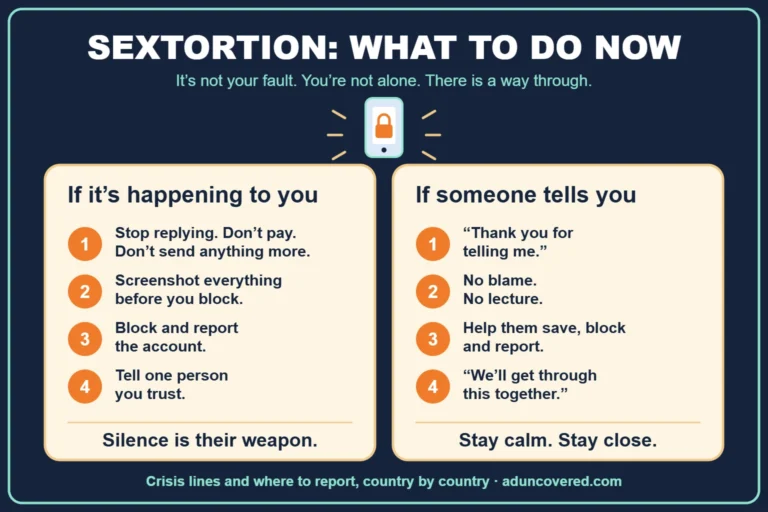
- Your personal photographs will be published.
The criminal presents themselves as someone who can resolve the emergency.
The victim’s attention shifts from verifying the claim to dealing with the perceived threat. Under pressure, they may disclose confidential information, transfer money or follow instructions without checking whether the situation is genuine.
Hope: Selling a Better Future
Hope is particularly powerful in investment, employment and recovery scams.
The criminal offers something the victim wants:
- Financial independence.
- Exceptional investment returns.
- A successful business opportunity.
- A loving relationship.
- Recovery of previously stolen money.
The promise becomes emotionally attractive before its legitimacy has been established.
In investment scams, for example, the victim may be shown impressive trading results, testimonials and apparent account profits. The possibility of financial freedom can become more compelling than the need to verify the investment.
Love and Loneliness: Manufacturing Emotional Attachment
Romance scammers invest considerable time in creating the impression of a genuine relationship.
They may communicate throughout the day, remember personal details, share intimate stories and discuss marriage or future plans.
Over time, they can become the person’s primary source of emotional support.
Financial requests are then introduced within the established relationship.
The victim may experience the request as an opportunity to help someone they love rather than as a suspicious financial transaction.
Guilt and Compassion: Creating a Sense of Responsibility
Some scammers construct emergencies involving children, relatives, illness, accidents or financial hardship.
The victim is made to feel that refusing assistance would be selfish or cruel.
This exploits the natural human desire to help others.
Shame: Preventing Disclosure
Shame is particularly effective after someone has already lost money or shared compromising information.
Victims may fear being judged by their families, losing their reputation or admitting that they have been deceived.
The criminal benefits from this secrecy because fewer people can challenge the deception or offer an independent perspective.
2. Cognitive Manipulation: Influencing How People Think
Emotions explain only part of the process. Scammers also exploit how people interpret information, assess evidence and make decisions.
Several established psychological concepts help explain why victims sometimes continue participating even when warning signs emerge.
Confirmation Bias
Confirmation bias occurs when people favour information that supports their existing beliefs or expectations.
Imagine someone who wants to believe that an AI trading platform can generate passive income.
They encounter positive testimonials, impressive profit screenshots, successful-looking investors and videos explaining the trading system.
They may give these supporting claims more attention than contradictory evidence.
The scammer reinforces the belief by repeatedly supplying apparently confirming information.
Cognitive Dissonance
Cognitive dissonance describes the psychological discomfort associated with conflicting beliefs, attitudes or behaviour.
Consider an investment victim who believes they have found a legitimate opportunity.
The platform suddenly blocks withdrawals and demands additional payments.
The victim now faces conflicting information:
- The website looks professional.
- The account displays substantial profits.
- The supposed broker has been helpful.
- Withdrawals are suddenly restricted.
Instead of immediately accepting that the entire operation may be fraudulent, the victim may rationalise the new demands.
This can delay recognition of the deception.
The Sunk-Cost Fallacy
The sunk-cost effect occurs when previous investments of money, time or effort influence decisions about whether to continue.
For example, someone has already invested R100,000. The platform demands another R15,000 to release the funds.
The victim thinks:
“I have already invested so much. I cannot stop now.”
The previous loss becomes a reason to risk even more money.
The criminal exploits the victim’s reluctance to accept that the original investment may be gone.
Authority Bias
People often give greater credibility to individuals or institutions perceived as having authority.
Scammers exploit this by impersonating bank employees, financial advisers, police officers, lawyers, regulators and government officials.
They may also steal the identity of a genuine professional, copying their name, photographs, registration details and business information.
A genuine person’s credentials, however, do not establish that the person making contact is actually that individual.
Social Proof
People frequently use the behaviour of others as an indication of what is acceptable or trustworthy.
Scammers manufacture social proof through:
- Fake testimonials.
- Fabricated reviews.
- Purchased followers.
- Fake investment group members.
- Staged success stories.
- False payment confirmations.
The victim is encouraged to believe that other people have already verified the opportunity.
Cognitive Overload
Cognitive overload occurs when the amount or complexity of information exceeds the capacity available for processing it effectively.
An investment scammer might introduce several problems simultaneously:
- An account verification issue.
- An unexpected tax payment.
- A withdrawal restriction.
- A regulatory compliance requirement.
- A threatened account closure.
The victim becomes occupied with resolving each individual problem.
They may fail to step back and ask the more important question:
Why does this supposedly legitimate investment platform continually require additional payments before releasing my money?
3. Behavioural Manipulation: Getting the Victim to Act
Once the scammer has influenced how someone feels and thinks, the next objective is to influence their behaviour.
Several established persuasion techniques are particularly relevant.
Start Small: The Foot-in-the-Door Technique
This technique involves obtaining a small initial commitment before gradually increasing the demands.
In an investment scam, the progression might look like this:
- Register on a platform.
- Deposit R500.
- Make a small trade.
- See an apparent profit.
- Withdraw a small amount successfully.
- Deposit R5,000.
- Deposit R20,000.
- Deposit substantially more.
The initial request appears relatively harmless. Later demands are introduced within an established pattern of compliance.
A successful initial withdrawal does not prove that an investment platform is genuine. It may simply be part of the strategy used to encourage larger deposits.
Reciprocity: Creating an Obligation
The scammer provides something that appears valuable before requesting something in return.
Examples include complimentary investment advice, free training, gifts, personal assistance or an apparently generous initial payment.
The victim may feel an obligation to reciprocate.
Scarcity: Manufacturing Exclusivity
The victim is told that an opportunity is limited.
Examples include:
- Only five investment places remain.
- You have been selected for exclusive access.
- This trading strategy is available to selected clients.
- The offer expires today.
The objective is to make the victim fear losing the opportunity.
Intermittent Reinforcement: Unpredictable Rewards
Intermittent reinforcement occurs when rewards are provided inconsistently rather than every time.
A comparable pattern can occur in scams:
- A romantic partner provides affection, then withdraws it.
- An investment platform displays profits, then introduces obstacles.
- A promised payment occasionally materialises.
- A withdrawal is approved after repeated delays.
- A recovery specialist provides encouraging updates but never delivers the promised result.
The unpredictable appearance of rewards may encourage continued engagement.
Commitment Escalation
Once someone has made a commitment, the criminal can use that commitment as leverage.
The victim is reminded of previous payments, time already invested, promises already made and the money supposedly waiting to be released.
Stopping is presented as the unreasonable option.
4. Urgency: The Weapon That Prevents People from Thinking
Urgency is one of the most widely used techniques across different categories of fraud.
Scammers manufacture deadlines and immediate threats to discourage independent verification.
| Type of urgency | Example |
|---|---|
| Financial | Pay before the market closes. |
| Security | Your bank account is being accessed. |
| Legal | An arrest warrant will be issued. |
| Romantic | I need the money before I can leave. |
| Investment | The opportunity closes in 30 minutes. |
| Recovery | Your funds will disappear unless you pay today. |
| Employment | Pay the registration fee before the position is given away. |
Urgency exploits several psychological processes.
Reduced deliberation: The victim has less time to examine the information.
Fear of missing out: The victim believes delay means losing a unique opportunity.
Threat sensitivity: The victim prioritises removing an immediate threat.
Loss aversion: The victim focuses on what they might lose rather than evaluating the likelihood of receiving anything.
There is an important difference between legitimate urgency and manufactured urgency.
A legitimate organisation should be able to explain its requirements and allow its identity and claims to be independently verified.
A demand that verification must not delay payment is a significant warning sign.
5. Isolation, Secrecy and Psychological Control
One of the most damaging tactics is separating the victim from people who could challenge the deception.
This can happen gradually.
First, exclusivity is established.
“You are the only person I can trust.”
Then, outside opinions are undermined.
“Your family does not understand how investments work.”
Next, disclosure is discouraged.
“Don’t tell anyone about this opportunity. It is confidential.”
Finally, dependence is created.
“Let me handle everything. I know exactly what needs to be done.”
The victim becomes increasingly dependent on the scammer for information, reassurance and instructions.
Gaslighting and Reality Distortion
Gaslighting is sometimes used too loosely in discussions about scams. Not every lie is gaslighting.
The term is more appropriate when someone persistently attempts to undermine another person’s confidence in their own perception or interpretation of events.
For example, a victim questions why an investment withdrawal has not been processed.
The supposed broker responds:
- “You misunderstood the agreement.”
- “You are becoming paranoid.”
- “You are the reason the process is delayed.”
- “You don’t understand how professional trading works.”
The criminal shifts attention away from the suspicious conduct and towards the victim’s supposed inability to understand.
This can make the victim less confident about challenging subsequent demands.
6. The Scam Manipulation Lifecycle
Not every scam follows the same sequence. Some are immediate, while others involve weeks or months of relationship-building.
Nevertheless, sophisticated operations often display recurring stages:
- Target identification: Potential victims are identified through social media, advertising, data breaches, online communities or unsolicited contact.
- Profiling: Information is gathered about interests, financial ambitions, relationships and circumstances.
- Initial contact: An apparently legitimate advertisement, message, telephone call or business opportunity establishes contact.
- Credibility building: Impersonation, fabricated credentials, convincing websites, stolen identities and apparent social proof establish legitimacy.
- Emotional engagement: Hope, fear, affection, excitement or compassion is activated.
- Commitment and compliance: The victim is encouraged to take small actions that establish trust and participation.
- Pressure and escalation: Larger payments, additional information or more consequential actions are demanded.
- Control and retention: Reassurance, threats, secrecy and new promises keep the victim engaged.
- Financial extraction: Money, personal information, account access or other assets are obtained.
- Exit or repeat exploitation: The criminal disappears, continues extracting money or targets the victim again through another fraudulent operation.
This is an analytical model rather than a universal sequence. Some scams skip stages or use several simultaneously.
7. Different Scams, Different Psychological Strategies
The same psychological principles are adapted to different criminal objectives.
| Scam category | Primary manipulation mechanisms |
|---|---|
| Romance scams | Attachment, trust, dependency, isolation and fabricated emergencies |
| Investment scams | Authority, social proof, reward anticipation and escalating commitment |
| Impersonation scams | Fear, authority, urgency and obedience |
| Recovery scams | Desperation, hope, sunk-cost thinking and false reassurance |
| Employment scams | Financial need, hope and upfront commitment |
| Sextortion scams | Shame, fear, secrecy and threats |
| Emergency scams | Compassion, panic and immediate compliance |
| Cryptocurrency scams | Wealth expectations, exclusivity and social proof |
For example, romance scams and investment-based romance scams may both begin with relationship-building, but their financial exploitation mechanisms can differ.
In investment scams, the relationship may eventually become a vehicle for introducing a fraudulent trading platform.
Understanding these differences is important when investigating a particular case.
8. Why Intelligent and Educated People Become Victims
One of the biggest misconceptions about scams is that victims must be gullible, unintelligent or inexperienced.
Fraud research does not support such a simplistic explanation.
People can be highly intelligent and still make poor decisions when faced with carefully constructed deception.
Certain circumstances may influence susceptibility:
- Bereavement can increase the need for emotional connection.
- Financial difficulty can increase attraction to promised returns.
- Retirement can bring changes in income and social circumstances.
- Divorce or separation can create emotional vulnerability.
- Professional confidence can result in overestimating one’s ability to identify deception.
- Previous financial losses can create desperation to recover money.
- Social isolation can reduce access to independent opinions.
The important point is that intelligence does not eliminate emotional influence or cognitive bias.
A person may recognise suspicious details but continue because they are emotionally invested, frightened, desperate or convinced they have too much to lose by stopping.
9. The Second Victimisation: Why Recovery Scams Are So Effective
After losing money, victims may experience shame, embarrassment, anger, financial anxiety and desperation to recover their savings.
This emotional aftermath creates another opportunity for criminals.
A recovery scammer may claim to be:
- A blockchain investigator.
- A financial recovery specialist.
- A lawyer.
- A law enforcement contact.
- A regulator.
- A forensic accountant.
They may even know details of the original fraud, creating the impression that they have access to legitimate investigative information.
The victim is told that funds have been traced, frozen or located.
Then comes the payment demand.
Common explanations include:
- Recovery administration fees.
- Tax payments.
- Legal fees.
- Wallet activation fees.
- Currency conversion fees.
- Release charges.
The psychological manipulation is particularly effective because the victim is not simply hoping to make money. They are hoping to recover money they have already lost.
This is why previous scam victims can be targeted repeatedly.
The criminal is selling the possibility of reversing a painful experience.
10. How to Recognise Emotional Manipulation
Strong emotions are not evidence of fraud. Genuine relationships, emergencies and financial opportunities can also produce strong emotions.
The warning sign is when someone uses those emotions to prevent independent verification.
Ask yourself:
| Question | What to examine |
|---|---|
| Am I frightened? | What exactly am I being threatened with? |
| Am I excited? | Can the opportunity be independently verified? |
| Do I feel special? | Why has this person selected me? |
| Do I feel guilty? | Am I being made responsible for someone else’s circumstances? |
| Am I under pressure? | Why can’t I take time to verify? |
| Am I afraid to tell someone? | Why must this interaction remain secret? |
| Have I already paid? | Am I continuing because of what I have already lost? |
| Am I desperate to recover money? | Who benefits financially from promising to help me? |
The most useful response is to interrupt the emotional process.
Stop. Separate the emotion from the facts. Verify the identity and claims independently. Never rely on contact details or links supplied by the person making the demand.
11. The South African Context
These psychological techniques are particularly relevant to South African consumers encountering:
- Investment and trading scams advertised on Facebook and Instagram.
- Fake bank security calls and SIM-swap impersonation.
- WhatsApp impersonation and emergency requests.
- Fake employment and work-from-home opportunities.
- Romance scams involving fabricated international identities.
- Cryptocurrency and AI trading schemes.
- Recovery operations targeting previous scam victims.
The Financial Sector Conduct Authority (FSCA) has repeatedly warned about criminals impersonating legitimate financial services providers and advertising fraudulent investment opportunities.
Its warnings include concerns about unrealistic returns, social-media investment offers, upfront payments and additional charges demanded to recover investments.
The South African Fraud Prevention Service (SAFPS) also highlights impersonation and social engineering as important fraud threats.
For investment-related enquiries, consumers can use the FSCA’s official website to check financial service providers and published warnings:
12. Understanding the Psychology: A Better Way to Investigate Scams
Recognising suspicious statements is useful, but understanding how those statements influence behaviour provides a much deeper perspective.
A useful investigative approach is to examine six connected elements:
1. Emotional trigger: What emotion is the communication attempting to activate?
Fear, hope, love, greed, guilt, shame or desperation.
2. Psychological mechanism: What persuasion or cognitive mechanism is being used?
Authority, scarcity, social proof, reciprocity, commitment or cognitive bias.
3. Constructed belief: What does the criminal want the victim to believe?
That the opportunity is genuine, the person is trustworthy or the threat is real.
4. Pressure and control: What discourages independent verification?
Urgency, secrecy, isolation, intimidation or information overload.
5. Requested behaviour: What action is the victim being encouraged to take?
Pay, invest, disclose information, click a link, transfer funds or continue communicating.
6. Criminal benefit: What does the criminal obtain?
Money, personal information, account access, identity documents or continued financial extraction.
This approach is useful when examining advertisements, websites, emails, WhatsApp conversations, investment proposals and payment requests.
It also makes an important distinction between observable evidence and psychological interpretation.
For example:
- Observed evidence: A WhatsApp representative states that payment must be made within two hours.
- Psychological interpretation: This is consistent with manufactured urgency.
- Potential purpose: To discourage independent verification before payment.
The interpretation should never be presented as proven criminal intent without supporting evidence.
The Bottom Line: The Psychology of Scams Is About Control
There is a common thread connecting romance scams, investment fraud, impersonation, fake emergencies and recovery scams.
The criminal is not merely trying to convince someone that a false story is true.
The criminal is attempting to create an emotional and psychological environment in which believing that story becomes easier than questioning it.
They exploit what people want, what they fear, whom they trust and what they hope to achieve.
They use emotional triggers to influence thinking, psychological mechanisms to establish beliefs and behavioural techniques to obtain compliance.
This is why simply telling people to look for red flags is not enough.
People also need to understand how their own emotions and decision-making can be manipulated.
The most important lesson is this: Criminals do not necessarily need to defeat your intelligence. They manipulate the circumstances in which you use it.
Understanding that process is one of the most valuable tools in recognising and preventing fraud.
Related reading: Common scam techniques · Romance scams · Recovery scams · Fake investment and trading apps
Check before you pay
About to pay a seller or business you don’t know? Start with a Free Quick Check of the advert link. It screens for common warning signs and shows where each result came from.
If you need the seller researched, a Quick Report or Comprehensive Report brings together source-linked Search Results on the seller and the offer. Neither gives a verdict: you check the sources and decide for yourself.
Further Reading and Research
- Norris, G., Brookes, A. & Dowell, D. (2019). The Psychology of Internet Fraud Victimisation: A Systematic Review. Journal of Police and Criminal Psychology.
- Button, M. et al. (2014). Online Frauds: Learning from Victims Why They Fall for These Scams. Australian & New Zealand Journal of Criminology.
- Theoretical Basis and Occurrence of Internet Fraud Victimisation (2023). Frontiers in Psychology.
- Wang, F. (2026). A Scoping Review of Online Romance Scams: Conceptual Construction and Comparative Analysis.
- Australian Scamwatch: https://www.scamwatch.gov.au/
- US Federal Trade Commission: https://www.ftc.gov/
- US Commodity Futures Trading Commission: https://www.cftc.gov/
- South African Financial Sector Conduct Authority: https://www.fsca.co.za/
- South African Fraud Prevention Service: https://www.safps.org.za/
AdUncovered — Helping consumers understand suspicious online offers, identify deceptive claims and make more informed decisions.