Black Friday scams 2026: How to Shop the Deals Without Being Trapped
Paste a shop or advert link for a free first check. Need more? We research the seller and the offer and email you a report with every source linked, usually within minutes.
Free quick check. Source-linked findings, not a verdict. Need the seller researched? See report options
Black Friday falls on 27 November 2026, followed by Cyber Monday on 30 November. The risks extend beyond those two days, through early promotions, deliveries, returns and refund requests.
Expect more shopping through mobile phones and more use of AI to find products and compare deals. Adobe forecasts US online Black Friday spending of $12.9 billion, up 9.2% on 2025, and expects mobile devices to account for 57.4% of online spending across November and December. These are US forecasts, rather than worldwide figures. Adobe’s 2026 forecast
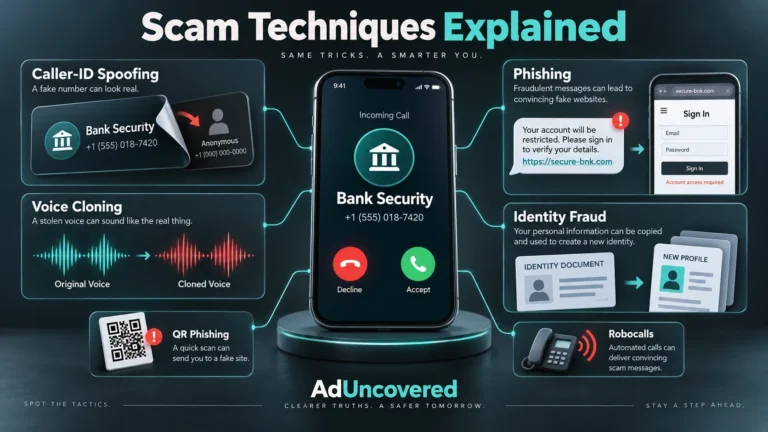
Fraudsters are also adapting. Many scams use familiar methods, but the messages, websites and impersonations are becoming more convincing. European financial regulators warn that AI can strengthen existing phishing and impersonation scams. Poor spelling is therefore an unreliable way to spot fraud. European regulators’ AI fraud guidance
International warnings show several developments worth watching:
Fake security checks. The FTC has warned about counterfeit CAPTCHA checks that trick people into installing malware. Treat a “prove you are human” request that asks you to run commands or install software as a warning sign. This is an emerging general threat, rather than a confirmed leading Black Friday scam. FTC CAPTCHA warning
A familiar account advertising an unfamiliar sale. Australia’s consumer regulator warns that criminals use compromised Facebook and Instagram accounts to promote fake “fire sales” to the account holder’s friends. Verify the offer with the person through another channel. ACCC warning
Unexpected parcels with QR codes. A note may ask you to scan a code to identify the sender or arrange a return. The link can lead to a phishing page that requests passwords or card details. Scanning a code does not automatically give someone access to your bank account; the danger lies in what the destination persuades you to disclose, install or approve. FTC parcel warning
Black Friday Scams – What to expect this Black Friday
Based on recent warnings from South African consumer authorities, financial-crime bodies and international consumer agencies, shoppers should expect four broad risks.
1. Fake shops that look real
Fraudsters can create websites, social-media pages and adverts that closely resemble known retailers. They may copy logos, product images, customer-service wording and even reviews. The aim is usually to collect payment details, personal information or payment for goods that never arrive.
The National Consumer Commission has warned that some online suppliers take payment and then become difficult or impossible to trace. It reported identifying additional untraceable suppliers in late 2025, including cases where websites disappeared or contact details could not be verified. National Consumer Commission
2. “Too good to miss” prices
A dramatic discount can make an offer feel urgent and safe at the same time. Watch especially for high-value products, holidays, electronics, branded goods and investment-style offers priced far below the normal market price.
This does not mean every low price is dishonest. It means the price should be checked against comparable offers before payment. The National Consumer Commission has specifically advised shoppers to know an item’s usual price before Black Friday so they can judge whether a discount is real. NCC consumer warning
3. Phishing messages about deliveries, orders and refunds
Expect more texts and emails claiming that:
- a delivery could not be completed
- an order needs confirmation
- a refund is waiting
- a payment failed
- a parcel fee must be paid
- a retailer account has been locked
These messages often use a link that leads to a fake login or payment page. The message may look like it comes from a courier, retailer, bank or payment provider. Do not use the link. Instead, open the retailer’s or courier’s official app or type its known website address yourself. The FTC has warned that fake delivery notifications are a common route into phishing scams. FTC delivery-scam guidance
4. Pressure tactics designed to stop you thinking
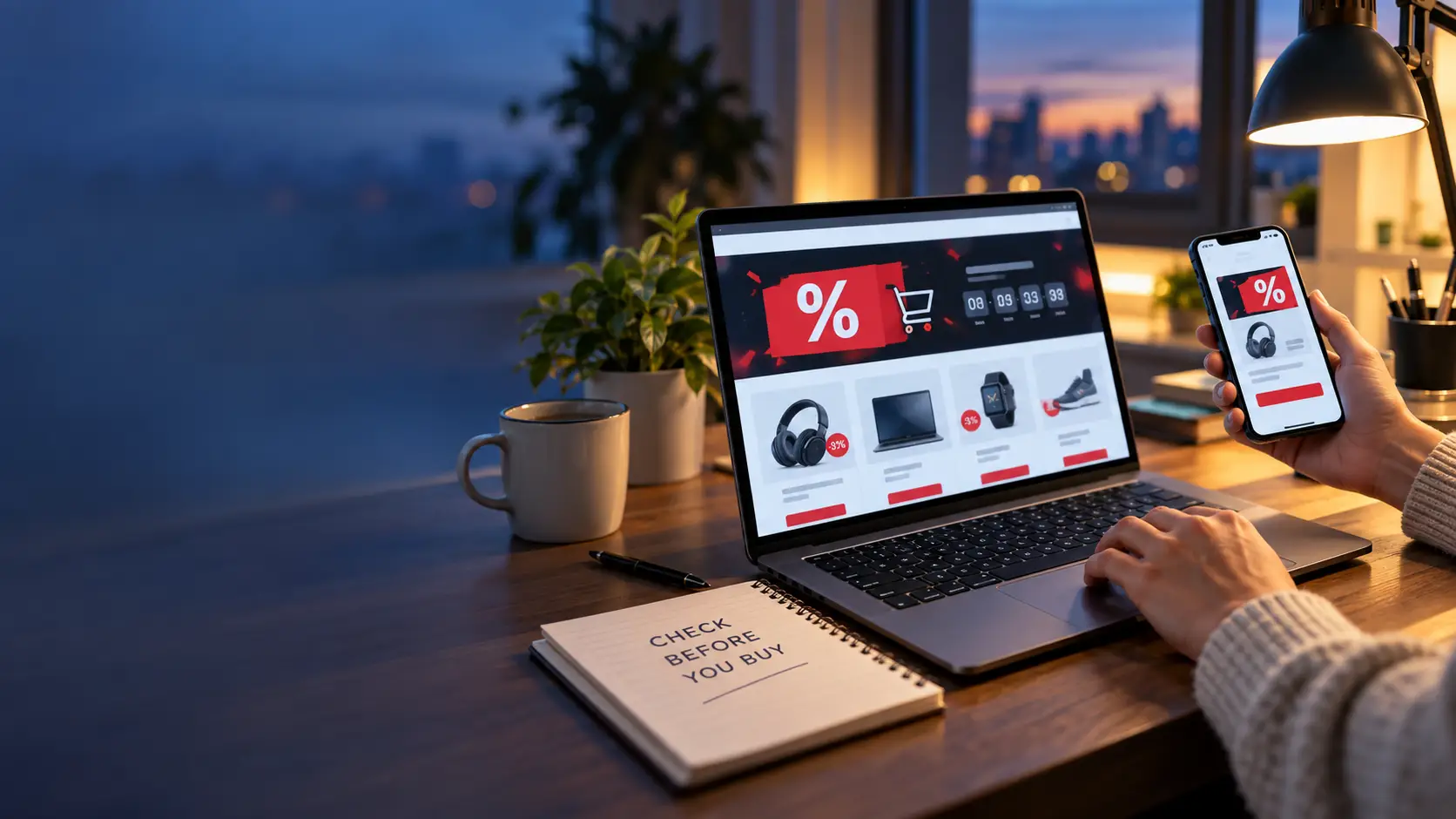
“Only two left.”
“Offer ends tonight.”
“143 people joined today.”
“Reserve now.”
“Last chance.”
These claims may be genuine, exaggerated or impossible to verify from the advert alone. Their purpose is often the same: make delaying feel risky.
The most useful response is simple: pause. If an offer is sound, asking reasonable questions should not make it disappear.
When a shopping scam becomes a banking scam
The loss may extend beyond the price of the advertised item.
A fake checkout can collect card details. A supposed refund can lead to a fake banking login. A caller claiming to investigate a suspicious purchase can persuade someone to transfer money to a “safe account”.
South Africa’s SABRIC reports R2.4 billion in digital banking losses during 2025, with banking-app-related crime accounting for more than 70% of those losses. These are annual banking-crime figures, rather than losses attributed to Black Friday. SABRIC’s 2025 statistics
Watch particularly for these three situations:
1. A purchase code that actually registers a digital wallet
Criminals may obtain card details and then trick the cardholder into sharing a code that authorises adding the card to a wallet on another device. Singapore Police have warned about this method.
Read the bank’s message carefully. Does it describe the purchase you are making, or does it say you are registering a wallet or device? Never share the code with a caller or supposed customer-service agent. Singapore Police warning
2. A seller asking you to leave the platform
An extra discount for paying directly by bank transfer can remove the protections offered by a marketplace’s checkout.
In the UK, purchase scams accounted for 71% of authorised push-payment fraud cases in 2025, with losses reaching £118.1 million. In these scams, victims are deceived into making the payment themselves. UK Finance’s 2026 report
3. A refund that requires you to authorise a payment
Check the direction of the transaction. A request described as a refund may actually ask you to send money.
India’s Reserve Bank warns that receiving money does not require entering a PIN or one-time password. Whatever payment system you use, read the approval screen rather than relying on the seller’s explanation. RBI payment warning
If an unexpected caller says your account is at risk, end the call and contact your bank using its official app or the number printed on your card. Do not transfer money to a supposed “safe account”.
Research checked on 24 October 2026. Forecasts may change, and international fraud statistics use different reporting methods and should not be compared as country rankings.
How to check an offer before you buy
You cannot guarantee that every offer is safe. What you can do is reduce the chance of being rushed into an avoidable mistake.
Check the seller, not only the product
A convincing product page tells you very little if you do not know who is selling it.
Look for:
- the registered business name
- a real physical address
- working contact details
- a clear returns, cancellation and delivery policy
- terms that identify the supplier
- an independent online presence beyond the advert itself
For South African businesses, company details can be checked through BizPortal. The Financial Intelligence Centre also recommends checking the company details, researching negative reviews and looking for scam warnings before dealing with unfamiliar online sellers. FIC holiday-scam guidance
A contact form alone is not the same as a traceable business.
Search beyond the advert
Search the seller name, website address, phone number and email address alongside words such as:
- review
- complaint
- scam
- refund
- delivery
- fraud
Read the results carefully. A few negative reviews do not automatically prove wrongdoing. Equally, a page full of perfect five-star reviews does not prove reliability. Look for detail, consistency and evidence that the business has existed beyond a recently created advert.
Check the website address closely
Fraudsters often use addresses that look almost right. A single extra word, misplaced letter or unusual ending can lead to a different website.
Before entering personal or payment information:
- check the full web address, not only the logo
- be cautious of unfamiliar domains and spelling variations
- do not assume the padlock icon proves a business is trustworthy
- open the retailer’s official site yourself instead of following an advert or text link
A secure connection protects the connection to a website. It does not prove that the people operating the site are honest.
Compare the complete cost
The headline price may not be the final cost. Check for delivery fees, admin charges, subscriptions, taxes, deposits, cancellation terms and currency conversion costs.
Ask: “What will I actually pay, when will I pay it, and what happens if the item or service is not delivered as described?”
Keep screenshots or records of the offer, price, terms and checkout page before payment. This is useful if the information changes later.
Use a payment method with protection where possible
Be cautious when an unfamiliar seller insists on payment by bank transfer, crypto assets, vouchers, gift cards or another method that is difficult to reverse.
The FIC recommends secure payment methods and advises particular caution where crypto is required. It also suggests using virtual cards where available. FIC holiday-scam guidance
This is not a guarantee of recovery. It simply gives you a clearer route to raise a dispute if something goes wrong.
Treat social-media adverts as leads, not proof
An advert appearing on a familiar platform does not mean the seller has been vetted. Social media can be used to imitate brands, create urgency and direct people to cloned shops.
Do your checking outside the advert. Visit the brand’s official website directly. Contact the business using independently found details. Do not rely on the contact button, comments or message thread attached to the advert.
A practical Black Friday pause checklist
Before buying from an unfamiliar seller, take five minutes and ask:
- Who is the seller, and can I independently identify and contact them?
- Is the offer price realistic compared with other sellers?
- What are the full terms, including delivery, cancellation and refunds?
- Am I being asked to pay in a way that offers little protection?
- Did I reach this site through an advert, text or email link rather than by finding it independently?
- Does the urgency claim stop me from checking the basics?
- Would I still buy if the countdown, scarcity message or glowing reviews were removed?
- A virtual card may reduce exposure of your main card details, but it does not verify the seller or protect you if you approve a fraudulent transfer.
If the answer raises questions, do not let the sale clock make the decision for you.
What to do if you have already paid
Act quickly, but do not panic.
Contact your bank or payment provider immediately and explain what happened. Keep all records: screenshots, adverts, emails, messages, payment confirmations, website addresses and the seller’s contact details. If you believe you have been defrauded, report it to the relevant platform and open a case with SAPS.
The FIC advises victims to report the matter to the financial institution used for payment, provide the full details and case number, and report the incident to the National Consumer Commission. FIC guidance
Do not pay another person who promises, for a fee, to recover your money quickly. That can become a second scam.
The sensible Black Friday rule
Black Friday rewards preparation, not speed.
Make a list before the promotions start. Set a spending limit. Track the usual price of items you genuinely need. Then treat every unfamiliar advert as a prompt to investigate, not an instruction to pay.
AdUncovered can help you look beyond an offer by researching the seller, claims and available public information. Your report records what was found, what public sources could support, where information differs and what remains unknown. It does not issue a scam, legitimacy or legal verdict. You evaluate the findings and decide what they mean for you.
Before you buy, give yourself permission to pause.
Found a Black Friday deal from a seller you don’t know? Start with a Free Quick Check, or order a Quick Report to research the seller and the offer before you pay. If a Black Friday order has already gone wrong, the Comprehensive Report researches the seller and your purchase.
Check before you pay
About to pay a seller or business you don’t know? Start with a Free Quick Check of the advert link. It screens for common warning signs and shows where each result came from.
If you need the seller researched, a Quick Report or Comprehensive Report brings together source-linked Search Results on the seller and the offer. Neither gives a verdict: you check the sources and decide for yourself.