Social Media Shopping Scams. Here’s What to Check Before You Pay
Before buying from a Facebook, Instagram, TikTok or other social-media advert, check the actual seller and exact website address independently. Compare the product, full price, delivery, return and subscription terms, and review Search Results outside the advert. Likes, comments, badges and a familiar face do not guarantee the offer.
These checks are for shoppers worldwide. The US and Australian sources below are identified by country; consumer rights, payment protection and reporting routes depend on where you are and on the transaction.
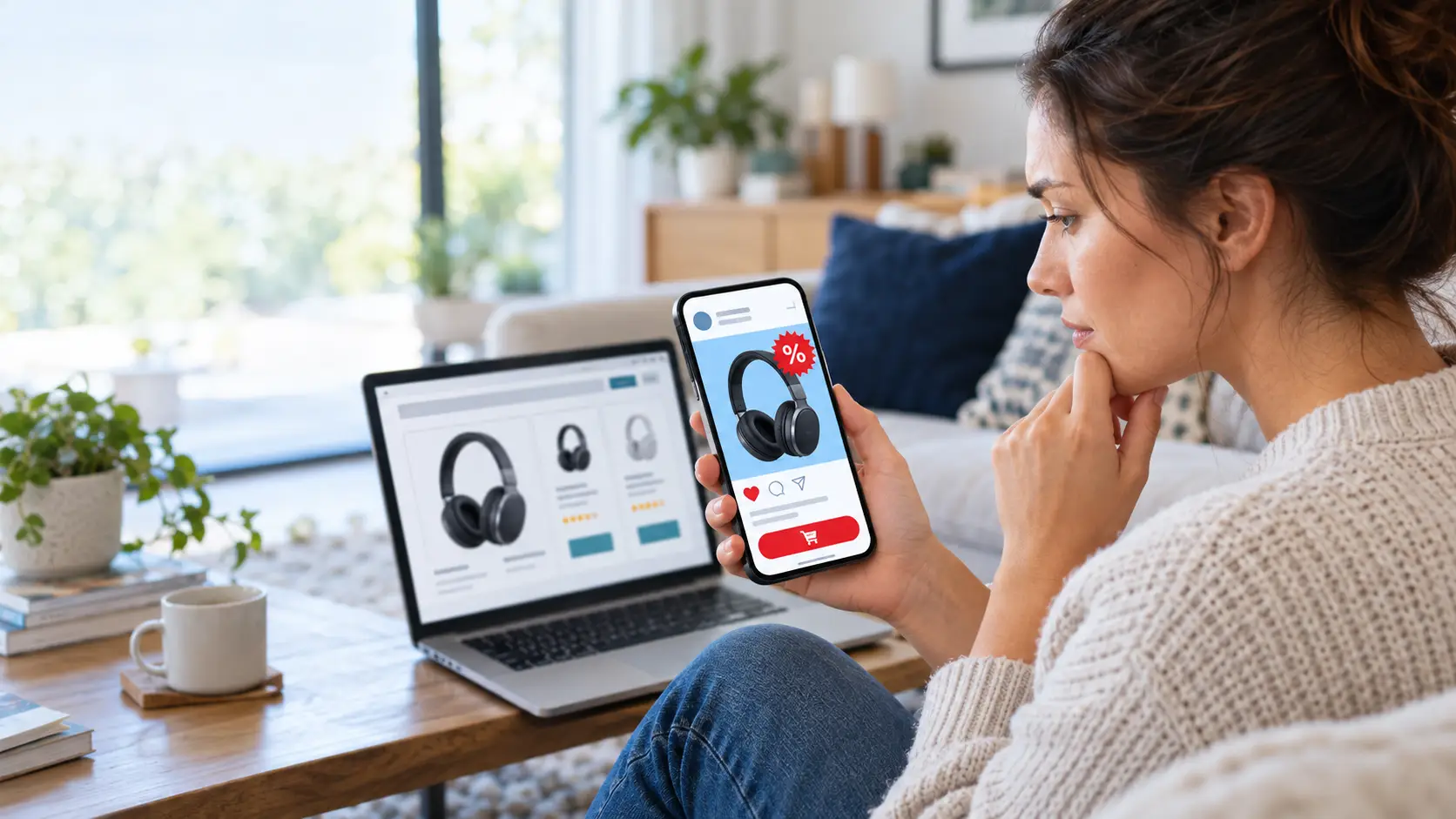
You are scrolling through Facebook, Instagram, TikTok or another social platform when an advert interrupts your feed.
The product looks familiar. The video is polished. Thousands of people appear to have liked it. A recognisable influencer seems to recommend it, and the discount will supposedly disappear within minutes.
It looks real because it was designed to look real.
That does not mean every social-media offer is dishonest. Legitimate businesses use social advertising every day. The problem is that an advert’s appearance, engagement and position in your feed do not establish who is behind it or what will happen after you pay.
In August 2026, the US Federal Trade Commission warned that social platforms do not always thoroughly vet the adverts or advertisers shown to users. According to reports made to the US FTC, consumers reported losing more than $95 million during 2025 after ordering products through adverts seen on social media. Because many incidents are never reported, the actual figure may be higher. FTC social-media advertising warning
The advert is only the beginning of the transaction. Before paying, you need to look beyond it.
Why social-media deals are so convincing
Social adverts arrive in an environment built around familiarity and speed.
They appear between posts from friends, news, entertainment and creators you follow. They can be targeted according to your interests, searches and browsing behaviour. If you recently looked at trainers, luggage or skincare products, an advert offering exactly that product may feel unusually relevant.
That relevance is not proof that the platform or brand has selected you personally. It may simply mean the advertising system placed the offer in front of someone likely to respond.
Social proof adds another layer:
- thousands of likes
- enthusiastic comments
- apparent customer photographs
- influencer demonstrations
- “verified” imagery
- live purchase counters
- claims that an item has gone viral
Some of these signals may be genuine. Others may be purchased, copied, automated or displayed without enough context to judge them properly.
The FTC reported that shopping scams were the most frequently reported category of scams beginning on social media in 2025. Most affected shoppers said their orders never arrived; others received counterfeit goods or products that differed from what was advertised. FTC social-media scam data
Common social media shopping scams: 10 patterns
These schemes do more than display an obviously suspicious advert. They combine several convincing elements so that each stage appears to support the next.
1. Cloned brands and lookalike storefronts
The advert copies the name, logo, photography and visual style of a recognised retailer. When you click, you arrive at a website that closely resembles the real store.
The address may differ from the official one by:
- one letter
- an extra word
- a hyphen
- an unexpected country code
- words such as
outlet,clearance,saleorofficial - a different domain ending
The shop may contain a complete catalogue, checkout process, policies and reviews. These features can be copied or created quickly and do not confirm that the genuine brand operates the site.
The FTC warns that social adverts may impersonate real companies and offer well-known products at unusually low prices. Shoppers may receive a counterfeit, an unrelated low-value product or nothing at all. FTC warning about impersonated brands
2. Cloaked adverts
Cloaking allows an advertiser to show one destination to a platform’s review systems and a different page to the people who click.
The review system may see an acceptable product page. The shopper may be redirected to a prohibited offer, a cloned store, a survey or a page designed to collect payment information.
In February 2026, Meta announced legal action involving advertisers accused of using cloaking and other methods to evade its enforcement systems. One operation allegedly promoted heavily discounted branded goods through a survey that led to a subscription scheme. Meta legal action against deceptive advertisers
This is why an advert’s continued presence on a platform should not be treated as proof that its final destination has been fully verified.
3. AI-generated celebrity and influencer endorsements
A familiar face may appear to demonstrate a product, describe a personal success story or announce an exclusive promotion.
In 2026, convincing video, voice and image manipulation can make it difficult to tell whether that person ever endorsed the offer. The person’s real content may also be edited and placed next to a product they have never used.
Scamwatch Australia specifically warns that social-media scams can impersonate celebrities and public figures using AI-generated deepfakes and fake news. Scamwatch social-media guidance
Do not use the face in the advert as your confirmation. Visit the public figure’s established account or official website independently and look for the same promotion there.
Even when an endorsement is genuine, it does not independently confirm every claim about the product, seller, refund process or expected result.
4. Survey rewards that become hidden subscriptions
The advert claims that a major retailer is clearing stock or rewarding customers. You are asked to complete a short survey and pay a small delivery charge to receive the product.
The small initial amount makes the transaction feel low-risk. The payment page may, however, include terms enrolling the customer in a recurring subscription.
Check the full amount, billing frequency and cancellation terms before entering card details. Take particular care when a valuable product is supposedly available for only the cost of postage.
A small payment can also be used to establish that a card works before further charges are attempted.
5. Fake closing-down and warehouse-clearance sales
An emotional video explains that a family business is closing after many years. Everything must go. The story may feature an owner, workshop or shopfront and encourage viewers to support the business before it disappears.
The store may actually be newly created, operate under several names or sell mass-produced goods unrelated to the story.
A closing-down story is not proof that the business is fake. It is a claim that can be checked.
Search for:
- the business’s earlier trading history
- photographs of the claimed shop
- independent references to the closure
- the age of the website
- other stores using the same images and wording
If the emotional story is genuine, information outside the advert should usually align with it.
6. Viral products sold through disposable stores
A short demonstration makes a gadget, beauty product or household item appear remarkable. The video spreads quickly and many near-identical stores begin selling it.
The product may exist, but important questions remain:
- Who manufactures it?
- Who is responsible for delivery?
- Is the seller an authorised retailer?
- Are the photographs accurate?
- Are safety claims supported?
- Where must returns be sent?
- Is the warranty usable in your country?
Some stores disappear after an advertising campaign ends. Others deliver a much cheaper product than the one shown.
Search product images and distinctive phrases from the advert. If the same content appears under unrelated store names and at widely different prices, investigate before buying.
7. Fake comments and manufactured reassurance
Illustrative comments such as these can make an advert appear independently confirmed. These examples are not testimonials about a particular seller:
“Mine arrived today!”
“I thought it was fake, but it really works.”
“Customer service was amazing.”
These comments may come from genuine customers, incentivised reviewers, compromised accounts, bots or profiles controlled by the advertiser.
Notice whether:
- many comments use similar wording
- accounts have little history
- questions about delivery or refunds go unanswered
- critical comments disappear
- the same photographs appear elsewhere
- comments were posted within a short period
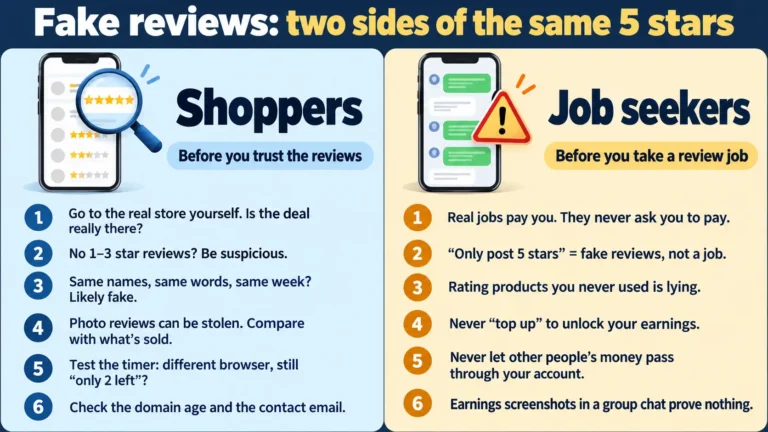
Do not rely on the comments attached to the advert. Search for information where the seller cannot control what is displayed.
8. Moving marketplace buyers away from the platform
A seller may ask you to continue the conversation through WhatsApp, Telegram, email or another service. They may then request direct payment or send an external payment link.
This can remove the transaction from the marketplace’s records and may cause you to lose any protection the platform would otherwise provide.
The US FTC advises shoppers not to pay outside a marketplace’s payment system. It also recommends checking who handles refunds, returns and disputes before buying. FTC online-marketplace guidance
Keep communication and payment within the official platform unless you fully understand the consequences of leaving it.
9. The post-purchase delivery trap
The risk does not necessarily end when you place the order.
A shopper expecting a parcel is more likely to believe a message claiming:
- the address is incomplete
- customs charges are due
- delivery was unsuccessful
- a small redelivery fee is required
- the parcel must be released
- tracking information needs confirmation
The link may open a copy of a courier’s website and ask for payment or login details.
A real order can therefore create the perfect timing for a second scam, even if the message is unrelated to the original seller.
Open the courier’s official website or app independently and enter the tracking number there. Do not use the link in an unexpected message.
10. QR codes delivered after an unsolicited order
In a variation of a brushing scheme, a person receives a package they did not order. The parcel contains a QR code inviting them to identify the sender, confirm delivery, claim a reward or arrange a return.
In July 2025, the FBI warned that these codes could lead to pages requesting personal or financial information or attempting to install malicious software. FBI QR-code package warning
An unexpected parcel does not create an obligation to scan anything. Treat the QR code as an unverified link.
What to check before you follow the advert
The safest first step is not to click.
Pause and record:
- the account name
- the advertised business
- the product
- the price
- the website address shown
- the claims being made
Then leave the social platform and search for the business independently.
Check the account behind the advert
Open the advertiser’s profile and look at its history.
Ask:
- When was the account created?
- Does its username exactly match the business?
- Are older posts consistent with the current identity?
- Has the account suddenly changed subject?
- Are the followers and engagement credible?
- Does the genuine brand link to this account?
- Is the account’s country or contact information consistent with the offer?
A blue tick or verification badge can be useful, but it is not enough on its own. Accounts can be compromised, and visual imitations of badges can be placed inside images or profile pictures.
Find the official website yourself
If the advert names an established brand, search for its official site or use a trusted bookmark. Do not assume the advert’s button leads there.
Compare the exact addresses. Then check whether the promotion appears on the official website.
For the website behind the advert, use our 12-check online-store checklist to examine the business details, website history, delivery terms and payment conditions.
Be cautious when the advert says the discount is available only through its link. Exclusivity can be legitimate, but it also prevents easy comparison.
Identify the actual seller
The brand shown in the advert may not be the business taking your payment.
Check the landing page, terms, privacy notice and payment screen for:
- the legal business name
- physical address
- customer-service details
- company or tax information
- delivery location
- returns address
- payment recipient
If different names appear at different stages, establish how they are connected.
A payment processor’s logo does not identify the seller and does not guarantee the underlying offer.
Compare the price and product
Search for the same product elsewhere. Use the model number where available.
A very low price does not automatically prove dishonesty, but it changes the questions you should ask:
- Is the item refurbished?
- Is it counterfeit?
- Is it a smaller or older version?
- Does the warranty apply?
- Are delivery fees added later?
- Is the payment actually for a subscription?
- Is the photograph showing accessories that are not included?
Read the complete description rather than relying on the video.
Check the website’s history
Use a domain-registration lookup to see when the website was created. A new website is not automatically illegitimate, but its age should agree with claims about the business’s history.
Search the store name, website address, email address and telephone number separately. Add terms such as:
reviewcomplaintscamrefundsubscriptioncounterfeitnon-delivery
Look across several sources. A page full of positive ratings may be controlled by the seller or may not relate to the same web address.
Read the terms before entering payment details
Find the delivery, returns, cancellation and refund policies.
Check:
- the total price
- recurring charges
- delivery time
- return deadline
- return destination
- restocking fees
- who pays return postage
- applicable country and law
- how to cancel a subscription
- who handles complaints
Copied terms sometimes mention a different business or country. That inconsistency deserves attention.
Choose the payment route carefully
Use a payment method that provides a clear dispute process where possible. Understand the deadlines and exclusions before relying on buyer protection.
Be cautious if the seller insists on:
- bank or wire transfer
- cryptocurrency
- gift cards
- payment through a private message
- payment outside the marketplace
- an unfamiliar payment page
- an immediate deposit to reserve the item
Never provide a card PIN or one-time authentication code to a seller. An authentication request should correspond to the payment you are making, for the amount and merchant you expect.
A 60-second pause before paying
Ask these questions:
- Did I find the seller independently, or do I know only what the advert shows?
- Does the social account connect to the business’s official website?
- Is the website address exactly what I expected?
- Can I identify and contact the business taking payment?
- Is the price believable when compared with other sellers?
- Are delivery, returns and recurring charges clear?
- Does the payment recipient match the disclosed seller?
- Am I being rushed away from checking?
- Would I still buy without the likes, comments, countdown and endorsement?
If important information remains unclear, do not let the advert make the decision for you.
What to do if you have already paid
Act quickly.
Contact your bank, card issuer or payment provider through its official channels. Explain what happened and ask whether the payment can be stopped, reversed or disputed.
Ask about the applicable procedure and deadline. Dispute rights and buyer protection vary by country, provider and transaction, and a refund is not guaranteed. Obtain contact details from the provider’s official website or app, not from an unexpected message.
Then:
- save screenshots of the advert and seller profile
- record the website address
- keep receipts, messages and order confirmations
- change any password reused on the site
- enable stronger account security
- monitor payment accounts for unfamiliar charges
- report the advert and account to the social platform
- report the incident to the appropriate fraud or consumer authority in your country
If card details, identity information or login credentials were exposed, tell the relevant provider exactly what information was shared.
Be cautious of anyone who contacts you afterwards and promises to recover the money for an upfront fee. Recovery scams often target people whose details appear on lists of previous victims.
The advert is not the offer
A social-media advert can show the product, price and promise. It may not show who is behind the store, where the goods come from, what the complete terms say or what happens when something goes wrong.
That information sits beyond the feed.
AdUncovered researches commercial offers using the details you provide and relevant public sources. Your private report brings together source-linked Search Results, with source references, differences between published statements and research limitations.
AdUncovered provides Search Results, not a verdict, opinion, recommendation or trust score. It does not guarantee safety or promise recovery of lost money.
We provide these Search Results so you can review the sources and decide for yourself whether the offer is right for you.
When a social-media deal looks real, pause before you pay and check what sits behind it.
Many of these patterns reappear in Black Friday adverts. Read Black Friday Scams 2026: Spot Fake Shops and Deals for what to check before you pay on 27 November.
Buying from a seller on Facebook, Instagram, TikTok or WhatsApp? If the advert links to a website or online shop, start with a Free Quick Check of that link. A Quick Report can research a seller even when there is no website: share the account name and any public links. If you’ve already paid and something is wrong, the Comprehensive Report researches the seller and your purchase.
Check before you pay
About to pay a seller or business you don’t know? Start with a Free Quick Check of the advert link. It screens for common warning signs and shows where each result came from.
If you need the seller researched, a Quick Report or Comprehensive Report brings together source-linked Search Results on the seller and the offer. Neither gives a verdict: you check the sources and decide for yourself.