To check for flight ticket scams before paying through an unfamiliar website or travel agent, research the seller independently, compare the complete fare and establish how the airline will confirm your booking. Verify any claimed ABTA membership or ATOL protection through official sources. A logo, receipt or booking reference is not, on its own, a guarantee about the offer.
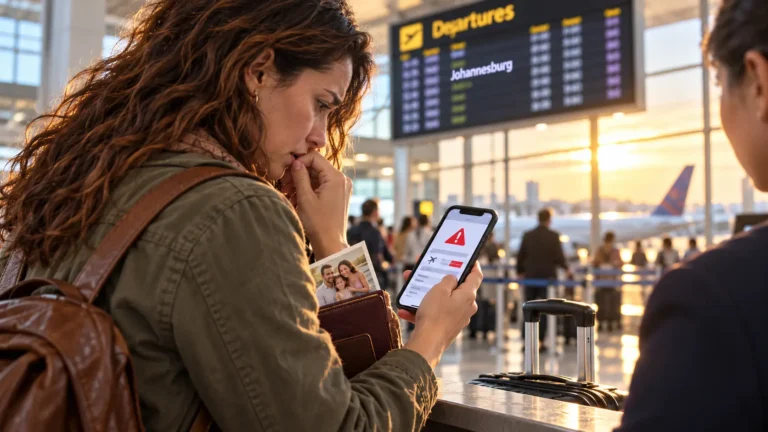
The fare looks unusually good. The agent says the last seats are disappearing. You receive a professional-looking itinerary and are asked to pay before the price changes.
What should you check before sending the money?
ABTA identifies fake airline tickets and payments for tickets that never arrive as travel-fraud patterns. The police’s Report Fraud guidance also describes travellers discovering at the airport that they are not booked on the promised flight. These reported flight ticket scams are documented risks, not a reason to assume every discounted fare or independent travel agent is dishonest.
Sources: ABTA travel-fraud guidance, Report Fraud holiday-fraud guidance.
This flight ticket scams checklist focuses on UK travellers. Protection and reporting arrangements elsewhere can differ. No single check guarantees that a seller will provide the flight exactly as advertised.
1. Identify the business taking your money
Find the legal business name, contact details and the identity shown on the invoice or payment request. Ask whether you are buying directly from an airline, through an agent or as part of a package.
For a UK company, compare its disclosed details with the free Companies House information service. Available records include the registered address and incorporation date.
A matching company record does not establish that the person contacting you controls that company or its website. Different trading and legal names are not automatically suspicious, but their relationship should be explained.
2. Find the website and contact details independently
When checking for flight ticket scams, do not rely only on the link or telephone number in an advert, message or emailed itinerary.
Check the exact website address, including spelling and the domain ending. ABTA advises checking for small changes to web addresses that imitate another business. Obtain contact details independently before asking the business whether it issued the offer.
An advert in a search result or social-media feed is still an advert. For offers found through Facebook, Instagram or another platform, see our social-media shopping checks.
Source: ABTA travel-fraud guidance.
3. Review Search Results beyond the seller’s own pages
To research flight ticket scams, search the business name and exact website address separately. Compare customer accounts across different sources rather than relying on the testimonials attached to the offer.
Check that comments concern the same business, website and transaction type. Look at dates, the reported problem and any published response. One complaint is not a determination of fraud; several accounts still need to be read in context.
Report Fraud’s holiday-fraud guidance advises researching the company before booking. Our online-store checklist also covers website history and disclosed business details.
Source: Report Fraud holiday-fraud guidance.
4. Compare the complete journey and price
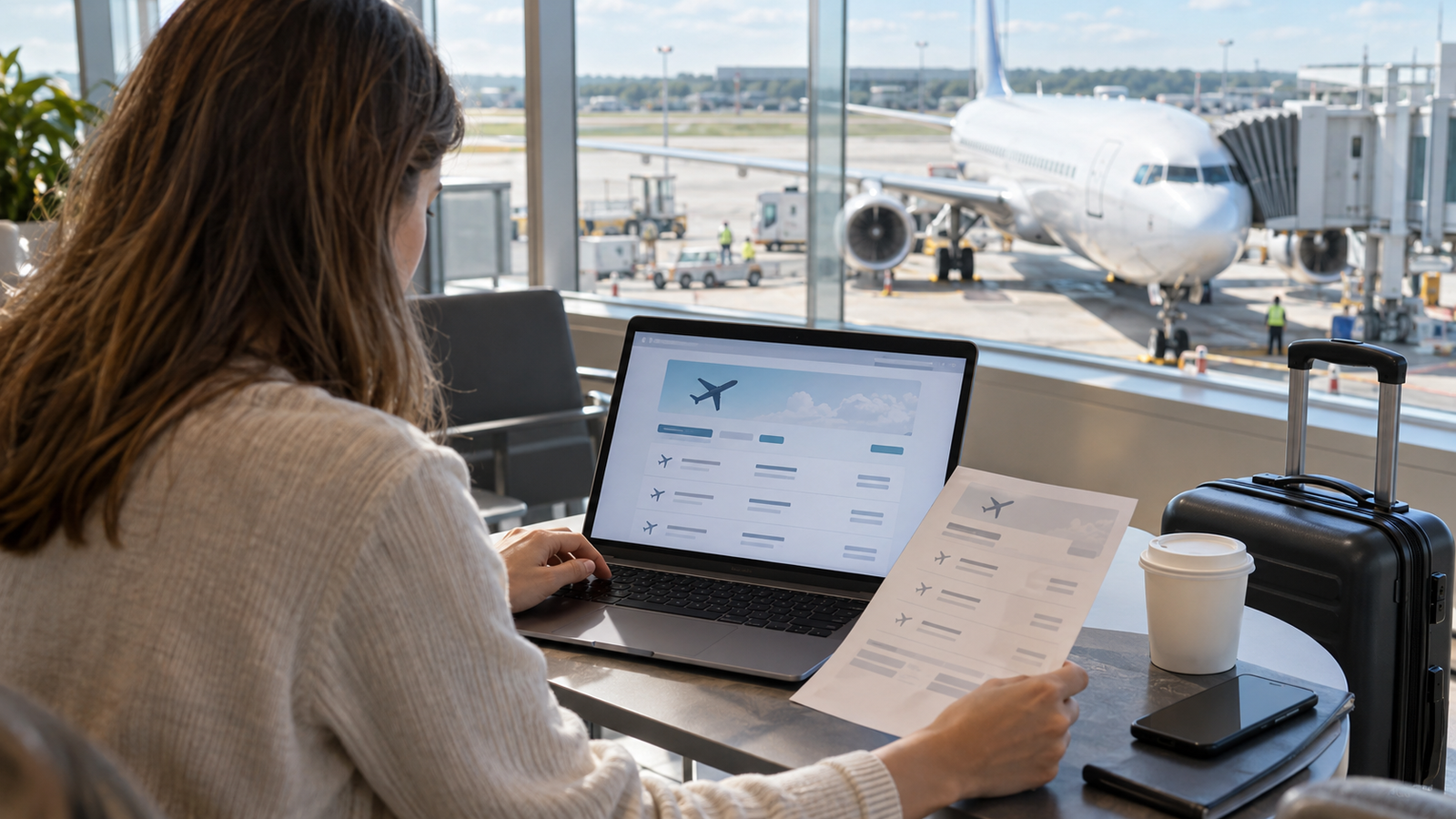
Ask for a written breakdown before paying. Check:
- passenger names
- departure and arrival airports
- dates, times and connections
- operating airline
- baggage allowance
- fare, taxes and additional charges
- agent’s fees
- any separately booked flight legs.
Do not compare two headline prices without comparing what each includes. The CAA explains that baggage allowances vary and that separately booked connecting flights are treated differently from a journey booked together. Ask explicitly whether your itinerary involves a self-transfer.
Source: CAA guidance on planning your trip.
5. Ask the airline to confirm the booking and ticket status
Before paying, establish when your booking details will be supplied. After booking, use the airline’s official website, app or contact channel to check them.
A booking reference and a ticket number can be different identifiers. For example, Emirates describes a six-character booking reference and a separate 13-character ticket number. That example is not a universal format for every airline.
Ask the airline whether it can locate the reservation and confirm the ticket or booking status required for travel. A reference printed in a message is not a substitute for that check.
If the booking cannot be retrieved, ask the airline and agent to clarify the correct reference and details. Do not immediately treat a failed lookup or delayed document as proof of fraud. Keep their responses and resolve the issue before travel.
Source: Emirates guidance on booking references and ticket numbers.
6. Flight ticket scams and the limits of ATOL protection
ATOL is financial protection for covered bookings if the travel organiser stops trading. The CAA explains that it applies to flight-inclusive packages and some flight-only bookings. It does not apply to every flight purchase.
It is not general insurance against cancelled flights or unsatisfactory service. Lack of ATOL protection, by itself, does not establish that a flight seller is fraudulent.
Ask whether this particular booking is protected, which company provides the protection and what arrangements it covers. Do not assume every product sold by a company has the same protection.
Source: CAA explanation of ATOL.
7. Verify the claimed ATOL holder and certificate
Use the official CAA ATOL-holder search to check the name or licence number being quoted. A picture of the logo is not the same as a matching official record.
For an ATOL-protected booking, check the certificate and the arrangements it lists. The CAA explains that the named ATOL holder may differ from the agent you booked with. An agent selling on a holder’s behalf does not necessarily need its own licence.
Ask for clarification if the names or covered arrangements do not match what you expected.
Source: CAA guidance on ATOL certificates and travel agents.
8. Check any claim of ABTA membership separately
If the seller claims ABTA membership, use ABTA’s official member search.
ABTA membership and ATOL protection are different checks. ABTA explains that its members commit to its Code of Conduct and that it offers a complaints-resolution process for bookings involving current members.
A matching membership entry does not, on its own, establish that a particular website, caller or payment request belongs to that member. Verify the connection independently. Absence of ABTA membership alone does not prove fraud.
9. Check the payment request, not just the advertised price
Compare the amount and recipient with the written offer. Ask about unexplained differences before authorising payment.
Pause if someone rushes you, demands secrecy or requests an unexpected payment method. MoneyHelper lists these as warning signs, not conclusions about a particular seller.
Ask your payment provider about dispute procedures, deadlines and exclusions. A refund is not guaranteed.
Source: MoneyHelper guidance on recognising scams.
10. Read the cancellation, change and refund terms
Ask who will handle changes or complaints: the airline, the agent or both. Check the fare restrictions and any separate agent fees.
Keep the terms supplied before payment and compare them with the airline’s published conditions. For an example, see British Airways’ General Conditions of Carriage. Use the conditions relevant to your own booking.
A non-refundable fare, a booking change or a service dispute is not automatically fraud. Establish what was advertised, what was agreed and what actually happened.
Flight ticket scams: what to do if you have already paid
If you suspect fraud or have exposed payment details, contact your bank, card issuer or payment provider immediately using official contact details. Explain the transaction and ask what steps are available. MoneyHelper advises prompt contact because the provider may be able to stop or recover a payment.
Separately, contact the airline about the booking and ask the agent for a written explanation of any missing or conflicting details.
Keep the advert, exact website address, itinerary, invoice, payment record, messages and terms. Do not post booking references, passport information or payment details publicly.
Available payment remedies depend on the circumstances. A report, complaint or dispute does not itself promise recovery. Ask the provider about the applicable procedure and deadline.
Sources: MoneyHelper’s immediate steps after a suspected scam, MoneyHelper guidance on payment problems.
For suspected fraud:
- England, Wales and Northern Ireland: use Report Fraud or call 0300 123 2040.
- Scotland: report to Police Scotland on 101 for a non-emergency. See Police Scotland’s contact guidance.
- Outside the UK: use the fraud-reporting or consumer authority relevant to your location.
Be cautious if someone later promises to recover the money in exchange for an upfront fee. MoneyHelper warns about follow-up scams targeting people who have already been affected.
Source: MoneyHelper scam guidance.
Flight ticket scams: questions answered
How can I check whether a flight ticket is valid?
Use the airline’s official booking tools or contact it through independently obtained details. Ask it to confirm the reservation and relevant ticket or booking status. Do not rely only on the appearance of an emailed document. Identifier formats and procedures vary between airlines; Emirates provides an example.
Are all flights ATOL protected?
No. The CAA identifies flight-inclusive packages and some flight-only bookings as covered. Check the protection for your specific purchase rather than treating ATOL as a guarantee for every flight. See the CAA’s explanation.
Does a cheap fare prove that a travel agent is fake?
No. When researching flight ticket scams, a price difference is a reason to compare the journey, conditions and full cost. Check the seller and the offer independently instead of drawing a conclusion from the discount alone.
Can AdUncovered tell me whether the seller is a scam?
AdUncovered provides source-linked Search Results, not a verdict, opinion, recommendation or trust score. It does not guarantee safety or promise recovery of lost money.
AdUncovered researches commercial offers using the details you provide and relevant public sources. The report brings together Search Results, source references, differences between published statements and research limitations.
We provide these Search Results so you can review the sources and decide for yourself whether the offer is right for you.
To check for flight ticket scams before paying, look beyond the fare. Check who is selling it, what you are buying and how the booking will be confirmed.
Check before you pay
About to pay a seller or business you don’t know? Start with a Free Quick Check of the advert link. It screens for common warning signs and shows where each result came from.
If you need the seller researched, a Quick Report or Comprehensive Report brings together source-linked Search Results on the seller and the offer. Neither gives a verdict: you check the sources and decide for yourself.