An AdUncovered guide | Updated 27 October 2026
In a digital arrest scam, a caller says your identity is linked to a serious crime. They may show an official-looking badge, a forged warrant or a police station background on video. They tell you to stay on the call, keep quiet and pay money to avoid arrest.
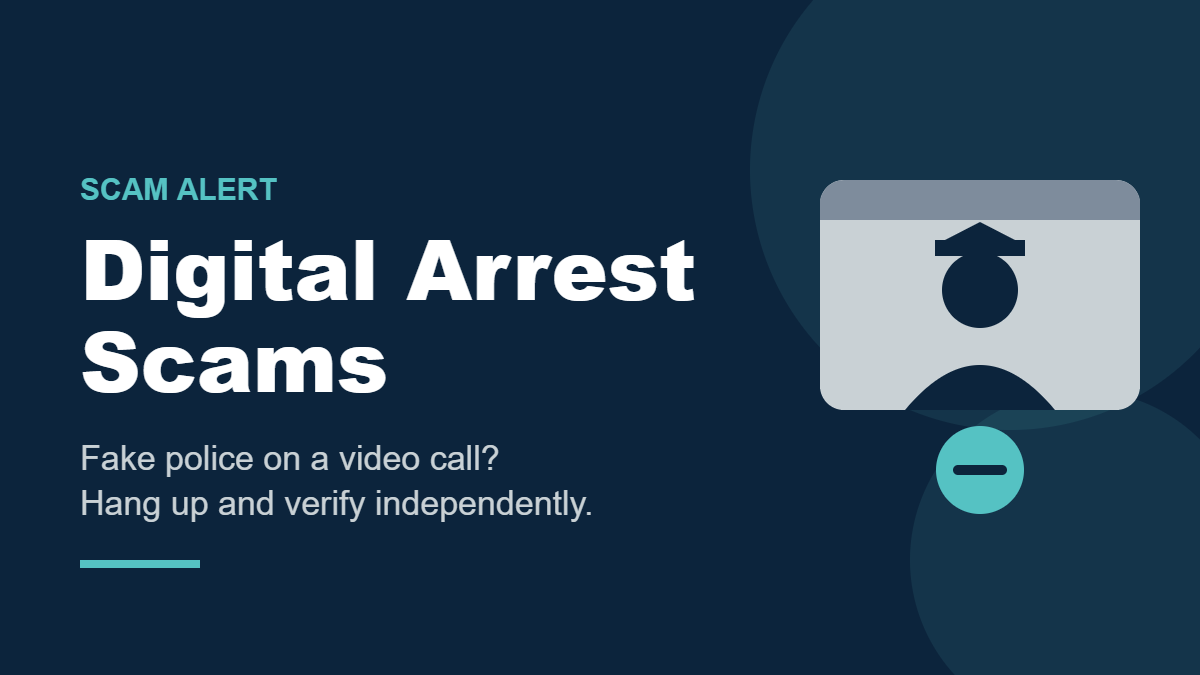
This is a scam tactic known as a “digital arrest.” The caller uses fear and isolation to pressure you into handing over money or personal information. A video call cannot itself place you under arrest. If someone demands payment to stop an arrest or an investigation, end the call and verify the claim independently.
What is a “digital arrest” scam?
Scammers impersonate police officers, customs officials, prosecutors or other government authorities. They contact a person by phone or messaging app, then may move the conversation to a video call.
The details vary, but the pressure often follows a pattern:
- They invent a serious allegation. They may claim your identity was used for a crime, a parcel contains illegal goods, or a bank account is under investigation.
- They make the threat feel official. They may use uniforms, logos, forged documents, staged backgrounds or the name and photograph of a real official.
- They try to keep you under their control. They tell you not to hang up, contact anyone or leave the camera view. They may say that secrecy is necessary for the investigation.
- They demand money or information. They might call it bail, a fine, a security deposit or a way to “clear your name.” They may also ask for identity details, banking credentials or access to your device.
The term “digital arrest” describes the scammers’ claim. It does not mean that a person has been legally arrested through a video call.
What’s been reported—and what the evidence shows
South Africans should be alert to police impersonation and extortion. In September 2026, SAPS Limpopo warned that scammers were allegedly using a police colonel’s photograph and claiming that victims’ relatives had been arrested. The callers allegedly demanded money for the relatives’ release. SAPS advised people to verify an alleged arrest directly with the relevant police station and report suspicious contact. The warning describes police impersonation and extortion; it does not establish that the same extended video-call tactic is widespread in South Africa. SAPS Limpopo’s warning
SAPS also warned in May 2025 about fake police calls and letters, including demands to pay to make a supposed case “disappear.” Its advice was not to share personal or banking information, not to pay, and to report the incident at a police station. SAPS said it does not communicate with the public via WhatsApp or video calls. SAPS warning on fraudulent police details
The “digital arrest” label has also appeared in documented cases overseas. In July 2026, India’s Central Bureau of Investigation described a case in which a victim was threatened with a fabricated terrorism allegation and a forged attachment order, then coerced into transferring money. India’s CBI case announcement Finnish police reported fake police video calls in June and July 2026, including calls using real officers’ faces and, in some cases, possible deepfake technology. Finnish police: initial warning Finnish police: further warning
These reports show how the tactic can work. They should not be read as evidence of how common it is in South Africa.
Why a video call or official-looking document isn’t proof
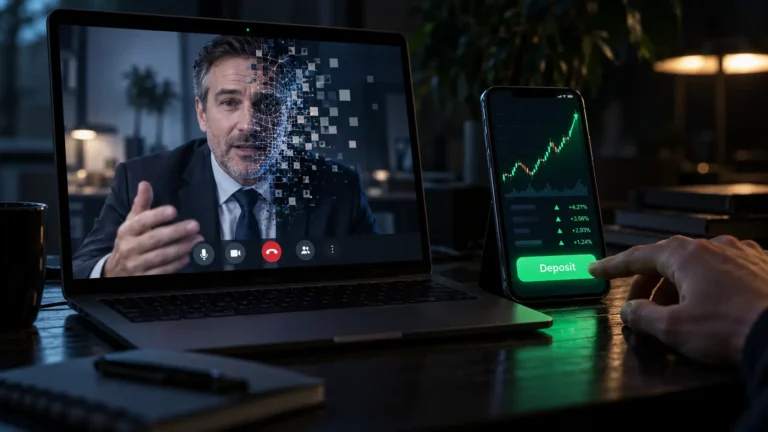
Video can make a scam feel convincing, but it does not authenticate the caller. A person can copy an official’s photo, use a forged document or stage a convincing background. Some reported scams have also involved manipulated video. Our guide to deepfake scams in South Africa explains how faked faces and voices are used.
Caller ID is not reliable proof of identity either. Scammers can make calls and messages appear to come from a different number or organisation. And a document with a badge, case number or official logo can be copied or fabricated.
Treat unexpected contact as unverified until you have checked it through a contact route you found independently. Don’t use the phone number, link or instructions supplied by the caller to confirm their identity.
What to do if a digital arrest scammer calls
- Hang up. You are allowed to end the call. You do not need the caller’s permission.
- Tell someone you trust. A friend or family member can help you think clearly and check the claim. Secrecy is part of the pressure tactic.
- Verify independently. If the caller claims a relative has been arrested, contact that person and the relevant police station using contact details you look up yourself. SAPS specifically recommends checking an alleged arrest directly with the relevant station.
- Do not pay. Don’t transfer money to “clear your name,” release a relative or stop an investigation. Don’t move money to a so-called safe account or pay in cryptocurrency or gift cards.
- Protect your information and devices. Don’t share your ID number, banking details, PIN, password or one-time password. Don’t show banking screens or install an app at the caller’s request.
- Save evidence if you can do so safely. Keep messages, numbers, profile names, documents and payment details. Don’t stay on a threatening call just to collect evidence.
If the caller says not to hang up, not to tell anyone or not to contact the police yourself, treat that as a serious warning sign.
If you already shared information or paid
Act quickly:
- Call your bank using a number you find independently, such as the number in its official app or on your bank card. Explain what happened and ask what steps it can take to secure the account or respond to the transfer.
- Report the incident to SAPS at your nearest police station. Take the evidence you have and ask for a CAS reference number so you can follow up. ISPA’s South African online-crime guidance also recommends asking for the matter to be investigated and obtaining the reference number and duty detective’s details. ISPA: reporting online crime in South Africa Our guide How to Report a Scam in South Africa lists who else to contact.
- Secure affected accounts. From a device you trust, change any passwords you shared or that may have been exposed. Contact your bank promptly if you revealed financial information.
- Tell someone you trust. Scammers often rely on embarrassment and isolation to delay help. Being deceived by a convincing threat does not make you responsible for the scam.
Remember
A threatening video call is not proof of an arrest, and paying a caller cannot safely “clear your name.” End the call, tell someone you trust, and check the claim with the relevant police station using contact details you found yourself.
Check before you pay
About to pay a seller or business you don’t know? Start with a Free Quick Check of the advert link. It screens for common warning signs and shows where each result came from.
If you need the seller researched, a Quick Report or Comprehensive Report brings together source-linked Search Results on the seller and the offer. Neither gives a verdict: you check the sources and decide for yourself.